Posts

Hospital Branding: Immersive Experiences Take Your Brand Below "See" Level

Image
Branding in healthcare organizations is still predominantly associated with how and where consumers see your brand.   It could be digitally, on traditional media, or your brand architecture displayed on signs and buildings.   But the total brand experience goes well below “see” level and must immerse your stakeholders in order to drive preference and create consumer loyalty.    The emergence of immersive marketing and its impact on brand value has caused marketers to recognize the value of being sensory driven as much as data driven.   The Huffington Post recently surveyed 1,600 companies and learned that 84% believe that experiential marketing activities and events are important, or very important to their organizations.    One of the companies that responded added,   “people are inherently social, and there is nothing that can make a more powerful statement about your brand than the ability to bring people together physically through immersi...

Immersive Experiences Take Your Brand Below "See" Level

Image
Branding in healthcare organizations is still predominantly associated with how and where consumers see your brand.   It could be digitally, on traditional media, or your brand architecture displayed on signs and buildings.   But the total brand experience goes well below “see” level and must immerse your stakeholders in order to drive preference and create consumer loyalty.    The emergence of immersive marketing and its impact on brand value has caused marketers to recognize the value of being sensory driven as much as data driven.   The Huffington Post recently surveyed 1,600 companies and learned that 84% believe that experiential marketing activities and events are important, or very important to their organizations.    One of the companies that responded added,   “people are inherently social, and there is nothing that can make a more powerful statement about your brand than the ability to bring people together physically through immersi...

Hospital Branding: Do you click with your audiences?

Image
This question used to be asked differently – “do your audiences click with you?”  Meaning, do they engage with your messages, watch your commercials, open your direct mail, or subscribe to your email. Today, it works differently.  It’s your brand’s job to click with its audiences in a way that encourages them to opt-in and engage with your organization.  These HubSpot statistics are a bit scary and support who’s really in control of message delivery and reception:          95% of consumers say they have skipped TV ads          98% have unsubscribed from an email           53% cite that there are direct mail pieces that go unopened         66% have requested to be on “do not call” list:  Approximately       200 million Americans  have  registered their phone numbers on     the FTC’s list As written about in other posts on thi...

Hospital Branding: The year of taking it personally

Image
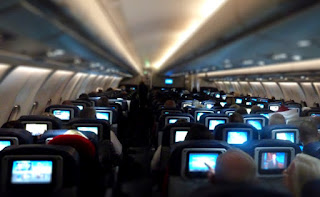
On a recent flight to a holiday destination, I was fortunate to be on a newer plane with many of the latest enhancements to passenger comfort and entertainment.  For example, I had my own personal communications screen that provided my choice of movies, network shows, new streaming programs (Netflix) and a host of other possible viewing selections.  While having a screen in the headset was nothing new, having that many personal choices was something that I hadn't seen before.  And if that wasn't enough, I could get wi-fi and choose from my personal inventory of entertainment and data options. As I stretched my legs and walked through the cabin, I noticed how many different channels were being watched.  In fact, I didn't see any two people on the same program.  This made me think of how times and the way we communicate with people have changed and how personal it has become. Staying on board the airplane theme, recall how airlines used to entertain us. ...

Hospital Branding Blog: Is your brand safe?

Image
At a recent breakfast featuring several CEO’s of Chicago hospitals, the panel was asked this question: “what keeps you up at night?”   Their answers really woke up the audience of nearly 500 and provided a chilling reminder about how the world and our priorities have changed. One panelist explained that his answer would have been very different years ago.   It would have focused on the hospital’s census, average length of stay, and quality ratings. Today what keeps these hospital CEO’s awake is concern over patient safety. At first glance, you might suspect that their comments have to do with Medicare’s Hospital-Acquired Condition (HAC) Reduction program.   Or, reports from the Agency for Healthcare Research and Quality that cite one in eight hospital admissions result in a patient injury of some kind.   After all, the HAC program alone costs hospitals nearly $400 Million in Medicare payments. This kind of  “patient safety” is not what these admin...